5th November 2026
Key takeaways
- Slow-burning risk drivers—factors that build gradually and exert influence beyond standard supervisory horizons—are becoming more important.
- Although frontloaded prudential action has value, many of these drivers are not yet explicitly integrated into the ECB’s supervisory approach.
- Slow-burning risk drivers should be addressed more systematically through existing micro- and macroprudential processes and instruments.
- We propose adding a fifth chapter to the ECB’s Supervisory Review and Evaluation Process (SREP) which would inform banks’ supervisory requirements and ECB’s macroprudential units, support policy decisions of both banks and authorities and, when possible, be disclosed publicly.
1. Bank risks and banking supervision: defining the task
Supervising banks and other financial institutions is complex. Banks undertake many activities and vary widely in their business models, while tectonic shifts and shocks are rapidly changing their operating environment. Supervisory decisions nevertheless rely heavily on backward-looking information, such as balance sheets and income statements reflecting past choices, and on legal mandates that emphasise historical data. Supervisors therefore face greater reputational and legal risk when acting prospectively. They also confront a stark asymmetry: success in containing risk is rarely recognised, while failures are punished severely, especially when taxpayers bear losses.
Yet risk is inherently forward-looking, and supervisors whose assessments fail to look ahead may fall short of their central function. As policymakers have long recognised, forward-looking supervision reduces risk and strengthens resilience. As the horizon over which risks materialise lengthens, the supervisory horizon must lengthen as well. How can European supervisors best achieve this?
In a recent report to the European Parliament we explore these issues; this post summarises it. We review the mandate of ECB-led supervision, then examine slow-burning risk drivers (SBRDs), whose adverse effects emerge mainly over longer horizons. We classify these drivers and consider how the resulting slow-burning risks (SBRs) can affect bank balance sheets and profit-and-loss statements. Our main recommendation is to add a fifth chapter to the four existing chapters of the SREP (Supervisory Review and Evaluation Process): a structured analysis of Sustained Threats to bank stability, their Impacts, and possible Remedies—in short, STIR. We conclude with lessons for managing supervisory burdens.
2. ECB supervision: its mandate and approach
The Single Supervisory Mechanism (SSM) oversees banks in the euro area and in non-euro area Member States that opt in. Created in 2012–13 amid the sovereign debt crisis, it aimed to break the bank-sovereign loop, make supervision more consistent, and repair weak balance sheets. Staffed with experienced line supervisors, its first decade has been remarkably successful. Early measures, including the non-performing loans action plan, rebuilt confidence, strengthened capital, and restored liquidity buffers.
The initial focus was naturally backward-looking, and that legacy still shapes practice. Bank business plans and EU-wide stress tests typically span three years. SREP, the annual process producing bank-specific Pillar 2 requirements and guidance, covers business models, internal governance, risks to capital, and risks to liquidity and funding. It captures the main forms in which risks manifest themselves but pays limited, unsystematic attention to exogenous conditions affecting banks over time. SBRs therefore largely fall outside its scope.
To be sure, ECB supervision does not ignore the future. The SSM has recently become more attentive to forward-looking considerations, partly in response to some of the same concerns developed in our paper. But, perhaps inevitably, its design and operation still largely reflect its origins. It may thus be the case that certain long-drawn-out risk drivers are already considered by supervisors, but only partially, with reference to specific impacts or to risks within a short time range.
Macroprudential analysis does not fill this gap. Within the ECB, it sits in the monetary policy “wing” and is kept separate from supervision. The ECB’s Financial Stability Review might be expected to devote more attention to long-term drivers than SREP does, but our assessment is that the two processes cover similar ground and reach similar conclusions. Consistency is maintained, but potential complementarity and synergies are lost.
3. ‘Slow-burning risk drivers’ and their rising importance
Bank risks arise from interactions between the operating environment—including shocks and disruptions—and banks’ responses. Together, these constitute risk drivers. Supervisors have little control over the environment but can influence banks’ actions. Risk manifestations often lag their causes by “long and variable” periods, to borrow a phrase from monetary policy.
We define SBRDs as factors that generate risks which build gradually and extend beyond standard supervisory horizons; their manifestations are SBRs. The evolving local and global environments suggest four increasingly prominent categories (Table 1): within the financial system; economic and financial factors outside it; non-economic factors; and spillovers from other policies.
Table 1: Categories of SBRDs and Examples

Risks may arise within the financial system from digitalisation, new instruments, shifts towards non-bank intermediation, market failures, or bank-specific externalities such as too-big-to-fail problems.1 Some of these SBRDs affect future balance sheets and income across the system; others erode income and franchise value if banks fail to adapt. Greater interconnection can also increase insolvency spillovers and balance-sheet impairment.
Economic and financial drivers outside the financial system include trade disruptions, productivity slowdowns, inefficient value chains, declining competitiveness, geopolitical fragmentation, and a weakened global financial safety net. Some may produce sudden system-wide stresses, such as when foreign central-bank liquidity lines are withdrawn, while others may gradually erode income and franchise value by reducing business opportunities.
Non-economic SBRDs include conflicts, pandemics, technological disruption, demographic change, and climate-related events. Many mainly affect franchise value by shrinking traditional activities and profitability. Others can have large, sudden balance-sheet effects, as illustrated by the war in Ukraine, sanctions on Russia, nature-related events, and state-sponsored cyber-attacks.
Finally, SBRDs may arise from spillovers from other policies, including climate-transition measures, taxation, and fiscal imbalances that strengthen bank-sovereign links. Deteriorating public finances and fiscally dominated monetary policy may reduce future bank income through financial repression and lower net interest margins. Stronger bank-sovereign links can also increase the risk of sudden adverse doom loops.
4. Strengthening the supervisory focus on SBRs
Frontloaded supervisory action has value. Yet the time horizon of supervisory responsibility is rarely specified in laws, by-laws, or charters and is largely left to judgement. The SSM’s legacy and EU legislation have encouraged a near-term focus. But policies introduced only after risks emerge are likely to be more costly, less effective, or both. Even when responsibility for mitigating SBRDs lies outside prudential policy, supervisors may need to help control the resulting risks to banks.
Extending supervisory attention to SBRDs need not alter existing risk categories: their manifestations are largely traditional risks already tracked by the SSM. EU legislation recognises credit risk, and, to a lesser extent, risks related to governance, management, liquidity, funding, counterparties, and operations. Although generally treated as current, idiosyncratic, and behaviour-driven, these are also the risk types SBRDs can generate. Reform can therefore build on existing processes.
We therefore suggest adding a fifth chapter to SREP: a structured analysis of Sustained Threats to bank stability, their Impacts, and possible Remedies—in short, STIR. STIR would inform supervisory requirements and recommendations through a dialogue between Joint Supervisory Teams (JSTs) and banks, structured around three questions:
- Which exogenous drivers (possibly drawn from a pre-arranged list) do you consider relevant as sustained threats to your bank, and why?
- What do you expect the impact of those drivers to be on your bank (through what channels)?
- What remedies, if any, do you already plan to control for those risks or mitigate their impacts?
This dialogue would gather field information, raise awareness, and secure banks’ buy-in. Line supervisors would vet and compare findings across banks before identifying the appropriate response. Information from the augmented SREP should be exchanged with the ECB’s macroprudential units, while material gathered for the Financial Stability Review (FSR) should be shared promptly with SSM units. Relevant information should support policy decisions on both sides and, where possible, be disclosed publicly.
To keep the dialogue efficient, STIR should draw on a preset list of SBRDs. Each year, SSM staff, working with other ECB areas, would prepare a tentative list for Supervisory Board approval, prioritised according to four criteria:
- Time horizon. We suggest three years—the typical lag between loan origination and impairment and the horizon of stress tests and business plans. That window is largely covered by existing processes but SBRs may already materialise. Beyond it, SBRs dominate.
- Observability and quantification. Is the driver observable, and can its impact be quantified, at least probabilistically? Stress tests combined with probability-based scenarios can help. The ECB’s climate stress tests illustrate both the progress and the limits: they are valuable but cover one channel and less than three years.
- Probability and timing. Flexibility is essential: for highly predictable trends such as climate change, pre-emptive action is warranted even when precise probabilities and timing are uncertain.
- Severity of impact. Some SBRDs, such as cyber or AI risks, are low-probability and highly uncertain but deserve attention because their effects could be devastating. Others, such as digitalisation-driven shifts in franchise value, are more gradual and predictable.
Impact discussions should focus on long-term effects, excluding shorter-term effects already captured in business-plan reviews, other parts of SREP, or stress tests. Table 2 groups impacts into two categories. The first covers profit-and-loss and balance-sheet effects, including income losses, erosion of franchise value, client bankruptcies, impairments, and market losses. The second concerns resilience: a bank’s ability to absorb and recover from operational shocks or lost investor confidence.
Table 2: Types of SBRs and Examples of Risk Manifestations

These manifestations should determine the best response. If demographics generate growing losses, frontloaded buffers or business-model changes may be appropriate. If digitalisation erodes franchise value, however, more capital may not help and could make matters worse. Assessments must therefore be case-specific.
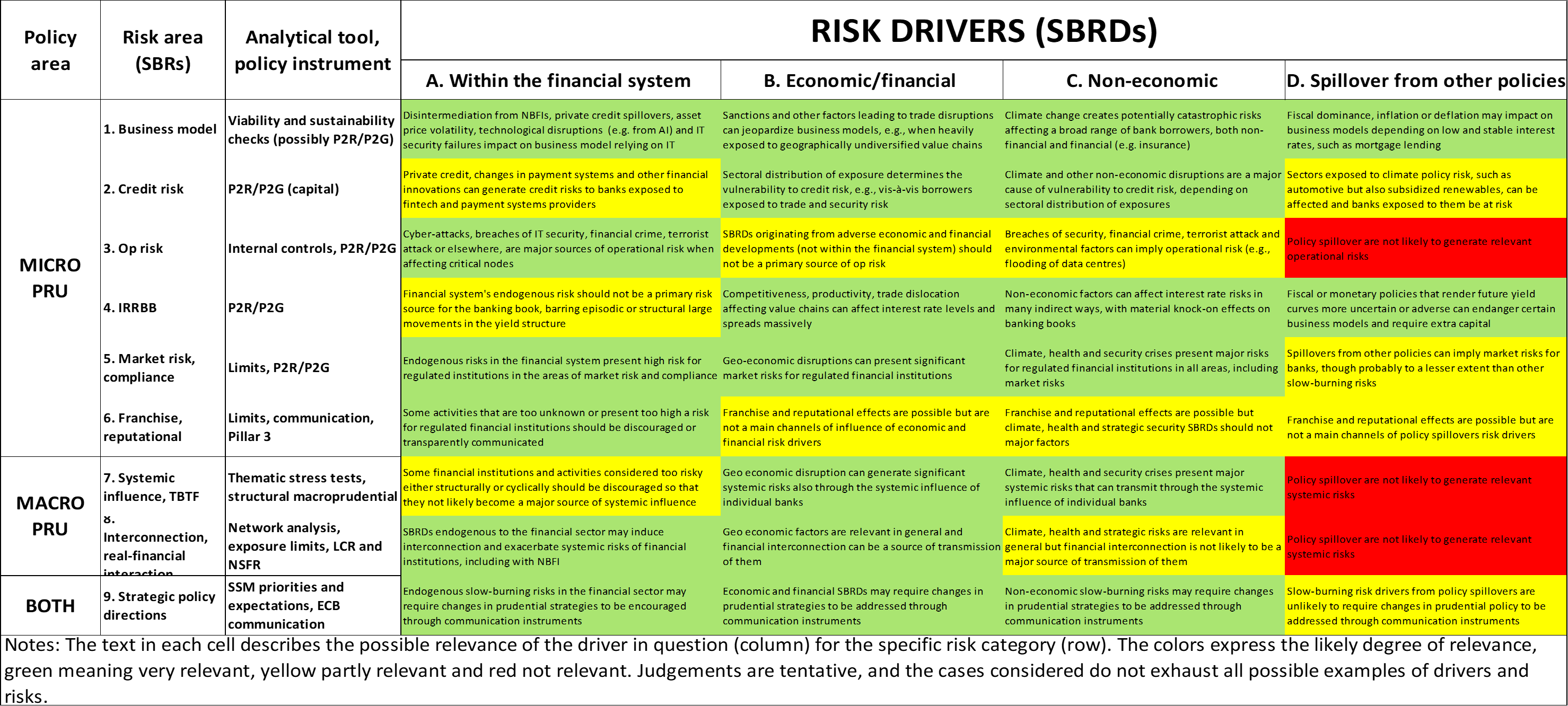
Table 3 categorises possible bank remedies against sustained threats; the Annex provides a fuller mapping. Measures include board and staff preparedness, stronger governance and risk management, physical and operational resilience, changes in procedures or activity limits, and capital or liquidity buffers. These bank-level remedies are distinct from SREP actions, which would be warranted where banks’ responses are absent or inadequate.
Table 3: Bank Remedies for SBRs

- Enhancing effectiveness while limiting compliance and prudential burden
The proposed changes need not—and should not—add reporting, compliance, or prudential burdens. Geopolitical and economic developments have made European competitiveness more important, and banks are central to Europe’s economies. Regulators must balance Basel compliance with the need to preserve banks’ competitiveness as deregulation advances elsewhere. The added SREP analysis should accompany broader simplification and modernization already under way at the SSM and elsewhere, including lighter reporting, greater proportionality for smaller banks, and a simpler micro- and macroprudential capital stack.
Endnotes
1. We do not include changes in prudential and other relevant financial regulations, including in other jurisdictions. While these could lead to (unintended) financial stability risks and may have other adverse spillovers, we consider regulatory policy changes to be responses to risks, rather than drivers of risks.
Reference
Angeloni, Ignazio and Stijn Claessens, 2026, “An EU Prudential Framework for Slow-Burning Risks Drivers,” ECON – Report to the European Parliament, September
Annex: Mapping between Existing Supervisory (Microprudential and Macroprudential) Tools, Risk Areas (SBRs) and Categories of SBRDs

Ignazio Angeloni is a senior fellow at the Leibniz Institute for Financial Research SAFE and at the Institute for European Policymaking at Bocconi University. Previously he served as a part-time professor at the European University Institute (2022–2024) and as senior fellow at the at the Harvard Kennedy School Mossavar-Rahmani Center for Business and Government (2019–2022). From 2014 to 2019, he was a member of the ECB’s Supervisory Board. In 2012–2013, as Director General for Financial Stability at the ECB, he coordinated the establishment of the Single Supervisory Mechanism. Earlier he held senior positions at the Italian Finance Ministry and at the Bank of Italy. Ignazio holds a Bachelor’s from Bocconi and a PhD in Economics from the University of Pennsylvania. He is the author of books and articles published in leading academic journals. His latest book co-authored with Daniel Gros is “Money in Crisis” (Cambridge University Press, 2025). His writings are found at ignazioangeloni.home.blog and on Substack.

Stijn Claessens is an Executive Fellow at the Yale School of Management. Until September 2023, he was the Deputy Head of the Monetary and Economic Department of the BIS, where he led policy-based analyses of financial sector issues, oversaw central bank committee secretariats, and represented the BIS externally in senior groups. He also worked in various positions at the World Bank (1987-2006) and was Assistant Director in the Research Department of the IMF (2007 -2014) and Senior Adviser at the Federal Reserve Board (2015 to early 2017).
He holds a PhD from the Wharton School and an MA from Erasmus University, Rotterdam. He taught at the New York University’s business school (1987) and at the University of Amsterdam (2001-2004). He is an associate editor at several journals, a CEPR fellow and Member of the Advisory Board of the Yale Program on Financial Stability. He has published in many eminent journals, and written and edited many books, including recently Nonbank Financial Intermediation and Financial Stability: A Perfect Storm in the Making? (G30, 2026), Bank Failures and Contagion (G30, 2024), and Much Money, Little Capital and Few Reforms: The 2023 Banking Turmoil (ICMB/CEPR, 2024).